
Thursday, 29 September 2016

Tuesday, 27 September 2016

Thursday, 22 September 2016
Horror film cliches
When we hear horror movie we automatically think blood, death, screaming, teenagers, demon's etc. there are several different categories for horror films; slasher, zombie, vampire, mainstream horror, Asian horror.
The more Gorey films usually contain people being capture and being tortured. When you see this you now there is no escaping it and you know how it will end.....not nice!
Horror films are mainly targeted at teens as they liked to be scared and have the feeling of 'being on the edge of your seat'. Even though some find the films so scary they will still go and pay to watch them, it must the thrill of them.
Horror films work best in rural areas, this because they have no one to scream for help for or no where to run away, there stuck there. this always makes horror movies more scary as your sitting there wanting them to get away but you just know in the end there going to end up dead.

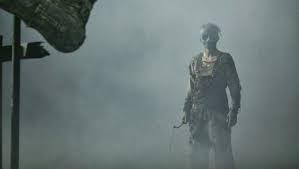
- Slasher horror is a film that involves a psychopathic killer who stalks and murders a particular victim.
- Zombie horror is a film that involves an invasion of a town or city with zombies. Usually the zombies carry a certain infection
- Vampire horror is a film involves someone holding a secret that they are a vampire but do not want anyone to know and then all of a sudden their finding somebody that they want to bite.
- Mainstream horror is the main cliche for a horror film. There is some sort of ghost, possessed person haunting your house or wanting to take your soul, you do everything in your power to get away from it but you simply cant, it follows you.
- Asian horror is just where the film is filmed in an Asian country.
The more Gorey films usually contain people being capture and being tortured. When you see this you now there is no escaping it and you know how it will end.....not nice!
Horror films are mainly targeted at teens as they liked to be scared and have the feeling of 'being on the edge of your seat'. Even though some find the films so scary they will still go and pay to watch them, it must the thrill of them.
Horror films work best in rural areas, this because they have no one to scream for help for or no where to run away, there stuck there. this always makes horror movies more scary as your sitting there wanting them to get away but you just know in the end there going to end up dead.
Wednesday, 14 September 2016
Analysis Feedback
Well done Libby, a confident start to your blog page and some interesting comments on the effects of the opening. Having now learnt further terminology to apply to openings, can you add some comments to the post below about the use of camera and how it makes the audience think or feel? Aim to comment on three significant moments involving camera to improve your response. Also, aim to comment on what we find out about the story - what key questions about Dom's character and his narrative are we asking as the audience?
Taken analysis
The scene from Taken, where the daughter is kidnapped, is a really tense and original idea and this iconic moment led to the film spawning sequels. There is some very clever dialogue as well as use of camera, editing and sound that make the scene so effective:
Sound
The scene is really tense because of use of music they have choosen. Even though the music is not very loud you know it is there. It is a very deep pro longed sound. This makes everything even more tense as you are waiting for something to happen when the music chages pitch or frequency.
Camera
As the tension increases we slowly track towards Liam Neeson. The use of camera is very clever and another thing that I really like is how we just seee the vilans feet. This creates a sense of mystery and really relies on the daughter to give us the information. We are wanting to know what they look like and all the details about them. This creates suspense as we are really wanting to find out, this also helps us relate to Liam as we are in his shoes as we do not know what they look like either.
Editing
The pace of the cuts is really very clever. The slow shot-reverse shot stresses their relationship whilst creating tension. The next thing that happens is a change of pace. The pace does not change a huge amount but we can see that it picks up just a little bit. This when she is being dragged from underneath the bed and then it cuts back to her dad. The editing pace still stays quite slow as Liam is quite calm but we can also see that he is very angry.
Rush Analysis
Rush is a sports biopic about the rivalry between Nickie Lauder and James Hunt and the opening scene is very clever - it sets up the wider narrative for the viewer and creates a foreboding sense of tension.
The opening shot is a really thoughtful one - it is a long shot of a stormy sky which connotes uncertainty, danger and conflict. Storms create this kind of feeling as we do not know what they will bring, its a feeling of the unknown.
We cut to a close up of a man's eye as he survey's the sky - this is interesting because it suggests mystery and it makes us question what is he feeling and thinking. As we wonder why he looks up to the sky it cuts to a shot where we can see him looking up at the sky in a formula one car. This explains in more depth as to why he was looking up at the sky. He could have been seeing what the whether was going to be like and planning how he is going to strategically win this race. You can see the passion in his eye as it cuts to the close up. This intensity also is conventional for drama.
A dramatic monologue begins. Some questions are asked by Lauder such as 'who would do this,' and we find out that two circuit racers are likely to die, statistically speaking, in the season. This creates more tension as you now have that thought in your head that this is as really dangerous sport and question whether they should be taking part in it or not. You can hear in his voice that this is a very important sport to him and how much time and dedication he puts into this sport.
We are shown a long shot of preparation for a formula one race in the late seventies. We pan up from the road and this is to lend emphasis to the track because it represents how important the road is to the sport and represents danger as you see all the men checking the car is safe and getting them ready for the race.
There is long shot of Lauder and Hunt and it emphasises the difference between the two men. We see Lauder being focused and spending some time on his own to make sure he will perform at his best but then we Hunt just standing around with a bunch of girls having photos taken with not a care in the world about the race. Its almost like Hunt is just brushing it to one side because he is loving the attention he is getting from the women. This shows a clear contrast between the two main characters. We can tell from this shot that Hunt and Lauder are rivals but we only see one of the main characters, Lauder, preparing for this race properly and actually making us think that he wants to win this race more than anyone else.
Bridget Jones's Diary analysis
Throughout the trailer of Bridget Jones's Diary there are many embarrassing moments, starting off with her big knickers when she is with her boss and then the karaoke when she is drunk and then finally when she answer the phone and says something rather inappropriate and then realises she is speaking to her father. Fathers in romantic comedys tend to be hapless figures of fun and the father in Bridget Jones is exactly that - which is why her inappropriate sexual comment he overhears is of little consequence.
The main character is relatable in many different ways, you could relate to her if you are also finding it hard to find love or if your life is just one big mess. Moving onto the love interests, during the trailer we see 2 potential boyfriends, one is inappropriate and the other one is the man she should be with. As the audience we know which one she should choose but during the film its not that simple. There is mainly always a fight that happens during a romantic comedy as two men want the same woman. This is a clear convention shown in Bridget Jones's Diary, one of the men offer a fight to the other one, hoping that at the end of the fight either one of them would end up with Bridget.
The clear stereotypes is one being the fight between the 2 men because they are both interested in Bridget and Bridget being confused about who she should pick to be with.
Bridget Jones Diary is considered to be the archetypal romantic comedy - it has all of the expected generic conventions and was so popular with its target audience that it became a franchise. The main character is conventional because she is unsuccessful in her love-life and at work. We all feel insecure and uncertain about whether or not we are fulfilling our potential - which is a reason why Jones is so likeable - the target audience can relate to her. We see in the trailer shots of her embarrassing herself in regrettable situations at work.
Dramatic irony plays a part in romantic comedies with the audience knowing who is right or wrong for the lead character before they do - and in the trailer we find out that Hugh Grant's character is a workaholic and a pervert, the things she does not like but is attracted to.
Subscribe to:
Posts (Atom)